
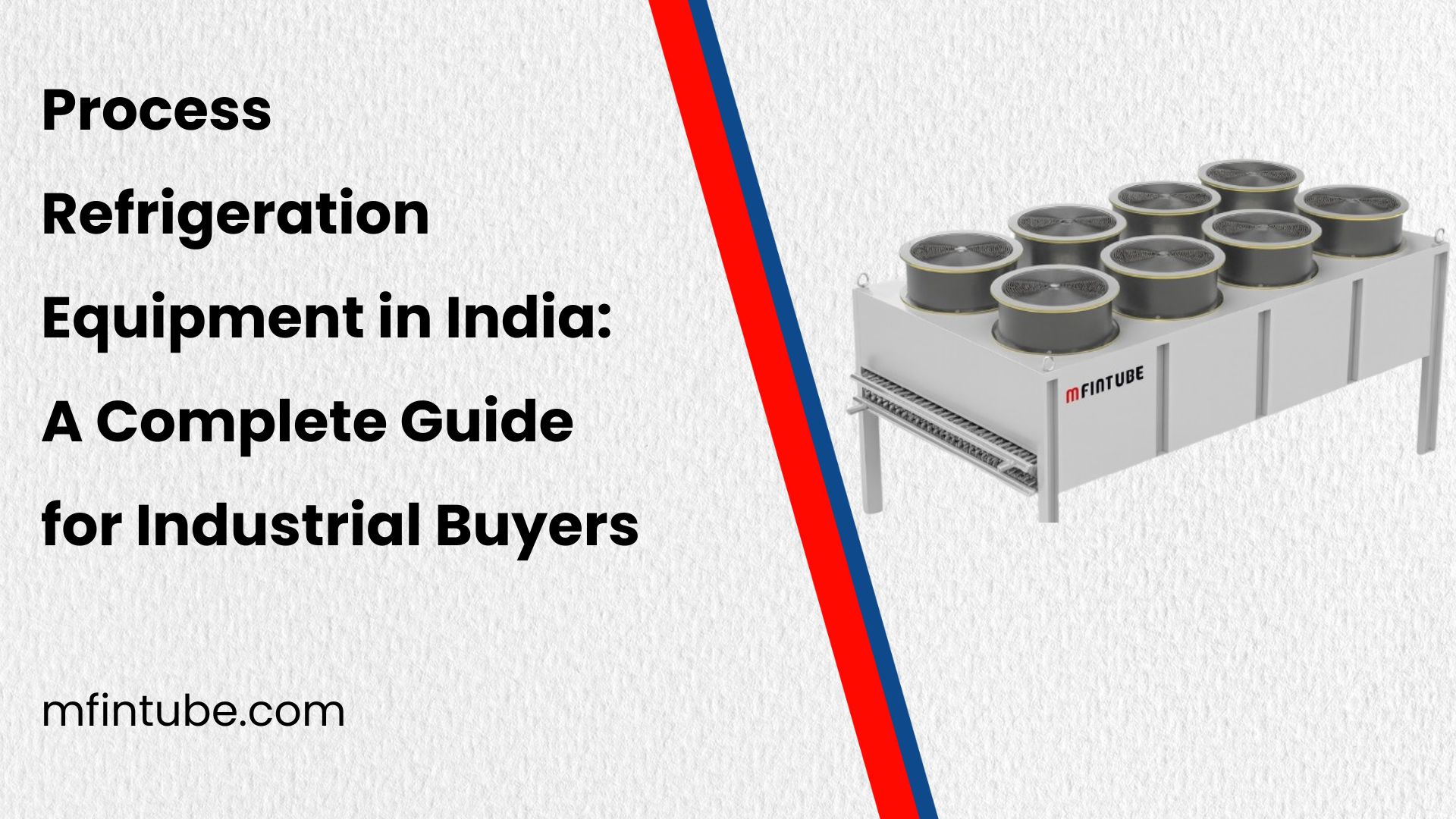
Process Refrigeration Equipment in India: A Complete Guide for Industrial Buyers
Introduction
Industrial processes often require precise temperature control to maintain product quality, protect equipment, and ensure consistent production. From chemical processing and pharmaceuticals to food manufacturing and industrial HVAC, reliable cooling is an essential part of many operations. Process refrigeration equipment in India is designed to provide controlled cooling for demanding industrial applications where standard commercial refrigeration may not be sufficient.
As industries focus more strongly on energy efficiency, process reliability, and operating-cost reduction, refrigeration systems are increasingly being selected based on their complete lifecycle performance rather than only their initial purchase price. Efficient compressors, heat exchangers, condensers, evaporators, automation systems, and appropriate refrigerants can significantly influence the performance of an industrial cooling system.
What Is Process Refrigeration Equipment?
Process refrigeration equipment refers to engineered cooling systems used to remove heat from industrial processes, fluids, products, machinery, or production environments. Unlike conventional comfort-cooling systems, these systems are designed around specific process requirements such as cooling capacity, operating temperature, fluid characteristics, duty cycle, and continuous operation.
Depending on the application, an industrial refrigeration system may include compressors, condensers, evaporators, chillers, pumps, expansion devices, controls, piping, and heat exchangers. Proper integration of these components allows industries to achieve stable and predictable process temperatures.
Key Features of Process Refrigeration Systems
1. Precise Temperature Control
Industrial processes can require closely controlled temperature ranges. Modern refrigeration systems can incorporate sensors, controllers, and automated regulation to maintain the required conditions.
2. High Heat-Transfer Performance
Efficient heat exchangers are important for transferring heat between process fluids and the refrigeration circuit. Fin-tube coils, shell-and-tube exchangers, evaporators, and condensers can be selected according to the application.
3. Continuous-Duty Operation
Industrial plants may operate for long hours or continuously. Therefore, refrigeration equipment must be designed for durability, stable performance, and manageable maintenance requirements.
4. Energy-Efficient Operation
Energy consumption is a major consideration when selecting industrial cooling equipment. BEE identifies measures such as efficient compressors, VFDs, optimum suction pressure, improved condenser performance, automation, and preventive maintenance as opportunities for refrigeration-system efficiency.
Benefits of Process Refrigeration Equipment
Improved Process Stability
Maintaining consistent temperatures helps reduce process variations and supports repeatable production quality.
Reduced Energy Consumption
Correct equipment sizing, efficient heat transfer, variable-speed drives, optimized controls, and regular maintenance can reduce unnecessary energy consumption. BEE's industrial energy-efficiency initiatives also emphasize reducing specific energy consumption across energy-intensive industries.
Better Product Quality
Temperature-sensitive products and materials can be adversely affected by excessive heat. Reliable process cooling helps protect quality throughout production.
Lower Maintenance Risk
A properly engineered system can reduce excessive compressor cycling, thermal stress, fouling, and other conditions that contribute to equipment problems.
Long-Term Operating Value
For industrial buyers, evaluating lifecycle cost—including energy, maintenance, downtime, spare parts, and expected service life—can provide a better purchasing perspective than comparing equipment prices alone.
Applications and Industries Served
Process refrigeration equipment in India is used across a broad range of industries where controlled cooling is required.
Food and Beverage
Refrigeration systems support food processing, dairy operations, beverage production, freezing, chilling, storage, and temperature-sensitive processing.
Pharmaceutical Industry
Pharmaceutical manufacturing can require controlled process temperatures for production, storage, and specialized cooling applications. BEE notes that refrigeration can represent a significant share of electrical load in pharmaceutical facilities, making efficiency particularly important.
Chemical and Petrochemical Processing
Cooling systems can be used for reaction control, condensation, solvent recovery, process-fluid cooling, and temperature management.
Plastics and Manufacturing
Industrial cooling may support moulding, extrusion, machining, hydraulic systems, and other manufacturing operations where heat must be removed continuously.
HVAC and Industrial Facilities
Process cooling systems can also support industrial HVAC applications, equipment cooling, data-intensive facilities, and specialized environmental-control requirements.
Why Is Process Refrigeration Important?
Temperature control directly affects production efficiency, safety, quality, and equipment performance. An undersized refrigeration system may struggle during peak loads, while an oversized system can result in unnecessary capital and operating costs.
The right system should therefore be engineered around the actual cooling load rather than selected solely from catalogue capacity. Heat-load calculations, process conditions, ambient temperatures, operating schedules, and future production requirements should all be considered.
Energy efficiency is another major reason for selecting appropriate refrigeration technology. BEE research on cold-chain systems highlights equipment-level efficiency improvements and the importance of considering both energy consumption and refrigerant-related environmental impacts.
Factors to Consider Before Choosing Equipment
Cooling Capacity
Determine the actual process heat load and required cooling capacity under normal and peak operating conditions.
Operating Temperature
Specify the required inlet and outlet temperatures, temperature range, and allowable variation.
Refrigerant Selection
Evaluate refrigerant characteristics, application suitability, safety requirements, environmental considerations, availability, and applicable regulations.
Heat Exchanger Design
Select the appropriate heat exchanger based on fluid properties, flow rate, fouling potential, pressure drop, and required heat-transfer performance.
Energy Efficiency
Compare compressor efficiency, condenser and evaporator performance, motor efficiency, VFD compatibility, controls, and expected annual energy consumption.
Maintenance and Service
Consider accessibility, availability of replacement parts, preventive-maintenance requirements, technical support, and expected downtime during servicing.
Future Expansion
Industrial facilities may increase production capacity over time. Selecting a system with suitable scalability can help avoid major modifications later.
Latest Industry Trends
The industrial refrigeration sector is increasingly moving toward energy-efficient, automated, and data-driven cooling systems. Variable-speed drives, intelligent controls, improved compressors, automated monitoring, and optimized heat exchangers are becoming increasingly important for reducing operating costs.
Another important trend is the consideration of lower-impact refrigerants and overall system efficiency. BEE's recent cold-chain recommendations specifically highlight the combination of energy efficiency with refrigerant selection and environmental performance.
Digital monitoring is also becoming more relevant. IoT-enabled sensors and centralized control platforms can help operators track temperatures, pressures, energy consumption, alarms, and equipment performance. BEE has identified IoT and digitization controls among measures that can improve refrigeration system operation.
Why Consider Mfintube?
For industrial buyers evaluating process refrigeration equipment in India, Mfintube can be considered for its focus on engineered heat-transfer and cooling solutions. Its experience with fin-tube coils and industrial cooling applications makes it relevant for projects where efficient heat transfer, appropriate material selection, and application-specific design are important. A solution-oriented approach can help engineering and procurement teams evaluate equipment based on process requirements rather than relying on generic specifications.
Conclusion
Choosing process refrigeration equipment in India requires more than comparing cooling capacities and purchase prices. Industrial buyers should evaluate process requirements, heat load, temperature control, heat-transfer performance, energy efficiency, refrigerant suitability, maintenance, automation, and future expansion requirements.
A properly engineered refrigeration system can support stable production, protect temperature-sensitive processes, improve energy performance, and reduce long-term operating risks. As industrial facilities increasingly adopt efficient and digitally monitored cooling technologies, selecting the right equipment and engineering partner has become an important part of sustainable plant management.
FAQs
1. What is process refrigeration equipment?
Process refrigeration equipment is an industrial cooling system designed to remove heat from processes, fluids, products, machinery, or production environments while maintaining specified temperature conditions.
2. Where is process refrigeration equipment used?
It is commonly used in food and beverage, pharmaceutical, chemical, petrochemical, plastics, manufacturing, industrial HVAC, and other temperature-sensitive industrial applications.
3. How can industrial refrigeration systems improve energy efficiency?
Energy efficiency can be improved through correctly sized compressors, VFDs, optimized operating pressures, efficient heat exchangers, improved controls, insulation, preventive maintenance, and continuous performance monitoring.
4. What should buyers check before selecting refrigeration equipment?
Buyers should evaluate cooling capacity, operating temperatures, refrigerant, heat exchanger design, energy consumption, materials, maintenance requirements, controls, service support, and future expansion needs.
5. Why are heat exchangers important in process refrigeration?
Heat exchangers transfer heat between process fluids and the refrigeration system. Their design and efficiency directly influence cooling performance, energy consumption, pressure drop, and overall system reliability.
CTA
Looking for reliable process refrigeration equipment in India for an industrial cooling application? Connect with Mfintube to discuss your process requirements and explore suitable cooling and heat-transfer solutions designed around your application's technical needs.
Read More: Process Refrigeration Equipment in India: A Complete Guide for Industrial Buyers