How to Choose the Right Adiabatic Dry Cooler Manufacturer in India
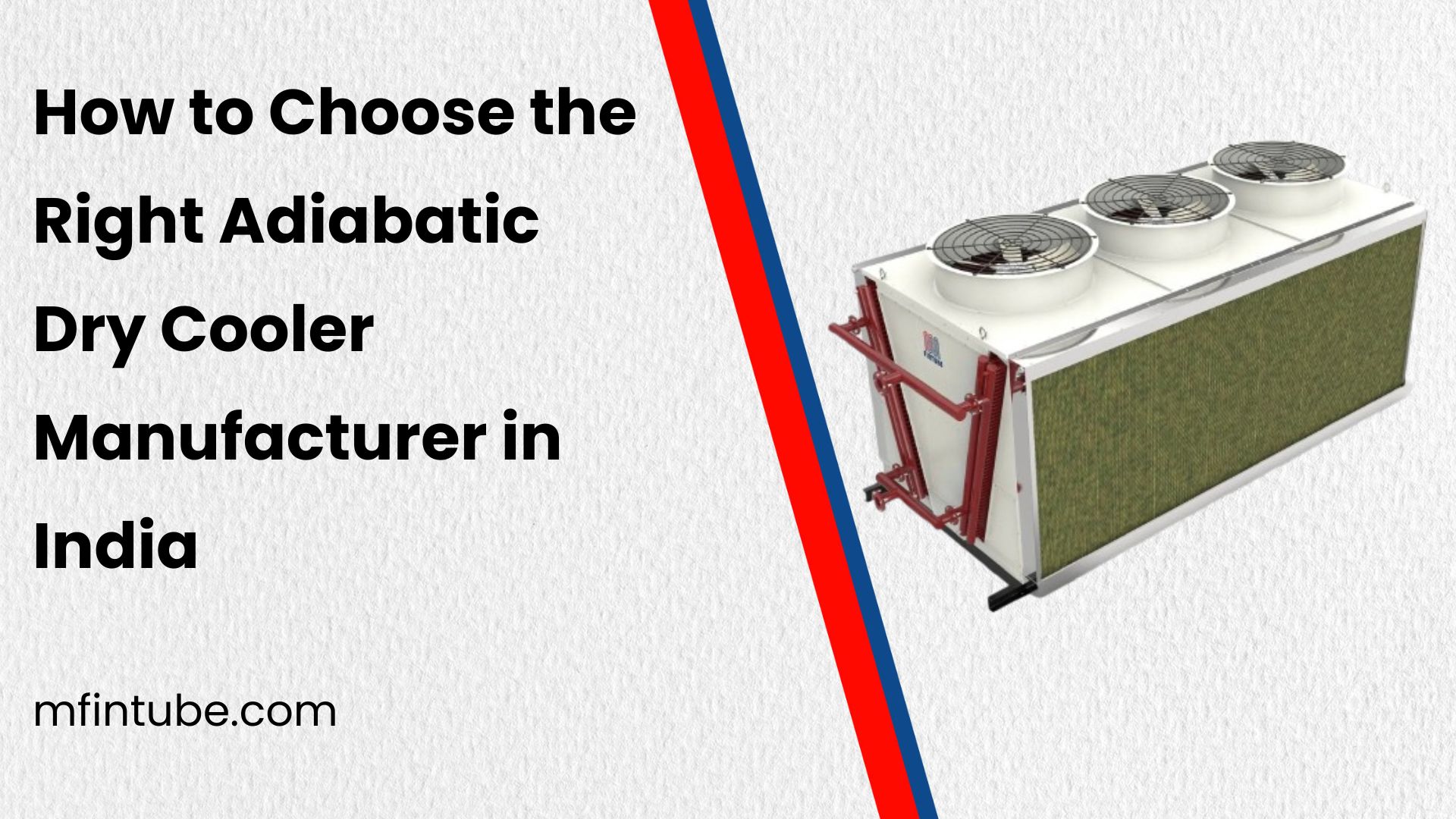
An adiabatic dry cooler manufacturer in India designs and builds air-cooled heat exchangers that combine sensible dry cooling with optional evaporative pre-cooling of incoming air, delivering efficient process fluid cooling while using far less water than traditional cooling towers.
These systems operate primarily in dry mode for most of the year. When ambient temperatures rise, water is applied to adiabatic pads or as a controlled mist. The water evaporates and lowers the air’s dry-bulb temperature before it reaches the finned coil. The process fluid stays inside a closed circuit, the coil itself remains dry, and scaling or fouling risks drop sharply. The result is fluid temperatures that can approach within about 5 °C of the wet-bulb temperature during peak conditions, with annual water use often reduced by 80 % or more compared with open evaporative towers.
Understanding the Technology and Its Advantages
Adiabatic dry coolers sit between pure dry coolers and full evaporative systems. Pure dry coolers reject heat solely through ambient air and require no water, but capacity falls when outdoor temperatures climb. Evaporative towers achieve lower fluid temperatures yet consume large volumes of water, need chemical treatment, and carry higher maintenance and hygiene considerations.
Adiabatic designs address both limitations. Fans draw air through wetted media only when needed. Water is typically once-through or carefully managed, often with UV sterilisation to minimise biological risk. EC fans, high-efficiency finned tubes, and intelligent controls further reduce energy use. Typical capacities start from around 100 kW and scale into multi-megawatt ranges suitable for process industries, data centres, pharmaceuticals, food and beverage, chemicals, and power-generation auxiliaries.
Key benefits relevant to Indian operating conditions include:
- Substantial water savings in regions facing scarcity or high utility costs
- Lower maintenance because the coil stays dry and water contact is limited
- Improved energy efficiency during hot periods through reduced fan power or higher heat-rejection capacity
- Reduced plume and lower Legionella risk relative to open towers
- Flexibility to run dry when ambient conditions allow
Key Factors When Selecting a Manufacturer
Choosing the right partner requires more than comparing nameplate capacities. Evaluate these practical criteria.
Engineering capability and customisation
Look for proven thermal design experience, the ability to model site-specific ambient data (dry-bulb, wet-bulb, and seasonal variation), and options for tube materials (copper, stainless steel), fin materials and coatings (including corrosion-resistant treatments), and coil configurations (V-type, flat-bed, or modular). Capacity ranges, fan diameters, and noise levels should match project constraints.
Water-management design
Effective systems minimise water use through intermittent operation, proper drainage, and filtration. Confirm whether pads, spray systems, or hybrid arrangements are offered and how the manufacturer addresses local water quality.
Component quality and reliability
High-quality adiabatic media, EC or high-efficiency fans, robust casing materials, and accessible headers improve longevity and serviceability. Ask about pressure testing, coating options, and track records in dusty or high-humidity Indian environments.
After-sales support and local presence
Service networks, spare-parts availability, and the ability to support installation, commissioning, and performance verification matter for long-term operation.
Compliance and sustainability focus
Manufacturers that prioritise energy-efficient designs, low water consumption, and adherence to relevant industrial standards help projects meet both operational and environmental goals.
Among Indian manufacturers with a focused approach to finned-tube heat exchangers and process cooling, Mfintube has developed a practical reputation for engineered solutions that address real site conditions. Their work on dry coolers and adiabatic systems emphasises application-specific design, quality materials, and performance suited to industrial and data-centre demands, giving buyers a reliable option when evaluating technical fit and long-term value.
Comparison of Cooling Approaches
|
|
|
|
|
|
|
|
|
|
|
|
|
|
|
|
|
|
|
|
|
|
|
|
|
|
|
|
|
|
|
|
|
|
|
This table highlights why adiabatic technology is frequently selected for Indian industrial sites that face both high summer temperatures and water constraints.
Practical Selection Steps
- Define process fluid temperatures, flow rates, and allowable approach.
- Collect accurate ambient design data for the site, including extremes.
- Assess available water quantity, quality, and any discharge restrictions.
- Evaluate footprint, noise, and power availability.
- Request thermal performance calculations and reference projects from shortlisted manufacturers.
- Review total cost of ownership—capital cost, water, energy, and maintenance—rather than first cost alone.
Frequently Asked Questions
1. How does an adiabatic dry cooler differ from a standard dry cooler?
A standard dry cooler relies only on ambient air. An adiabatic unit adds a pre-cooling stage that lowers incoming air temperature through controlled evaporation when ambient conditions exceed dry-mode capacity, improving heat rejection without wetting the process coil.
2. How much water can an adiabatic system save compared with a cooling tower?
Many installations report annual water reductions of 80 % or higher because the system runs dry for most of the year and uses water only during peak periods.
3. Is the process fluid ever exposed to the atmosphere?
No. The fluid remains in a closed loop inside the tubes. Only the incoming air is pre-cooled, so contamination and scaling risks on the process side stay very low.
4. What industries in India commonly use adiabatic dry coolers?
Process industries, data centres, pharmaceuticals, food and beverage, chemicals, plastics, and power-generation support systems frequently adopt them where water efficiency and reliable heat rejection are priorities.
5. What maintenance is typically required?
Routine tasks include inspecting and cleaning adiabatic pads or nozzles, checking fan operation, verifying drainage, and periodic coil cleaning. Because the coil stays dry, maintenance is generally lighter than for open evaporative systems.
Conclusion
Selecting the right adiabatic dry cooler manufacturer in India centers on matching technical capability, water-efficient design, component quality, and practical support to the specific demands of the site and process. Understanding how adiabatic pre-cooling bridges the gap between pure dry cooling and high-water-use evaporative systems enables informed decisions that balance performance, operating cost, and resource use. Careful evaluation of engineering depth, customization options, and proven application experience leads to systems that deliver stable cooling under Indian climatic conditions for years of reliable service.
For projects seeking a capable adiabatic dry cooler manufacturer in India with a strong focus on finned-tube heat-transfer solutions, contact Mfintube to discuss site requirements and explore engineered options that support efficient, water-conscious industrial cooling.
Read More: How to Choose the Right Adiabatic Dry Cooler Manufacturer in India