Cooling Heating Coils HVAC System in India: Complete Guide for Industrial Buyers
Introduction
Selecting the right cooling heating coils HVAC system in India is an important decision for industrial facilities, commercial buildings, and process-driven operations. Heating and cooling coils play a central role in controlling air temperature, supporting indoor comfort, managing process conditions, and improving the overall performance of HVAC equipment. For industrial buyers, engineers, plant managers, procurement teams, and business owners, understanding coil design and application requirements can support better equipment selection and long-term system performance.
A properly specified cooling heating coils HVAC system in India can be used in air handling units, fan coil units, ventilation systems, process air systems, and specialized industrial HVAC applications. However, selecting a coil based only on dimensions or initial price can lead to poor heat transfer, excessive pressure drop, corrosion concerns, or maintenance challenges. This guide explains the main considerations industrial buyers should evaluate before choosing HVAC heating and cooling coils.
Overview of Cooling and Heating Coils
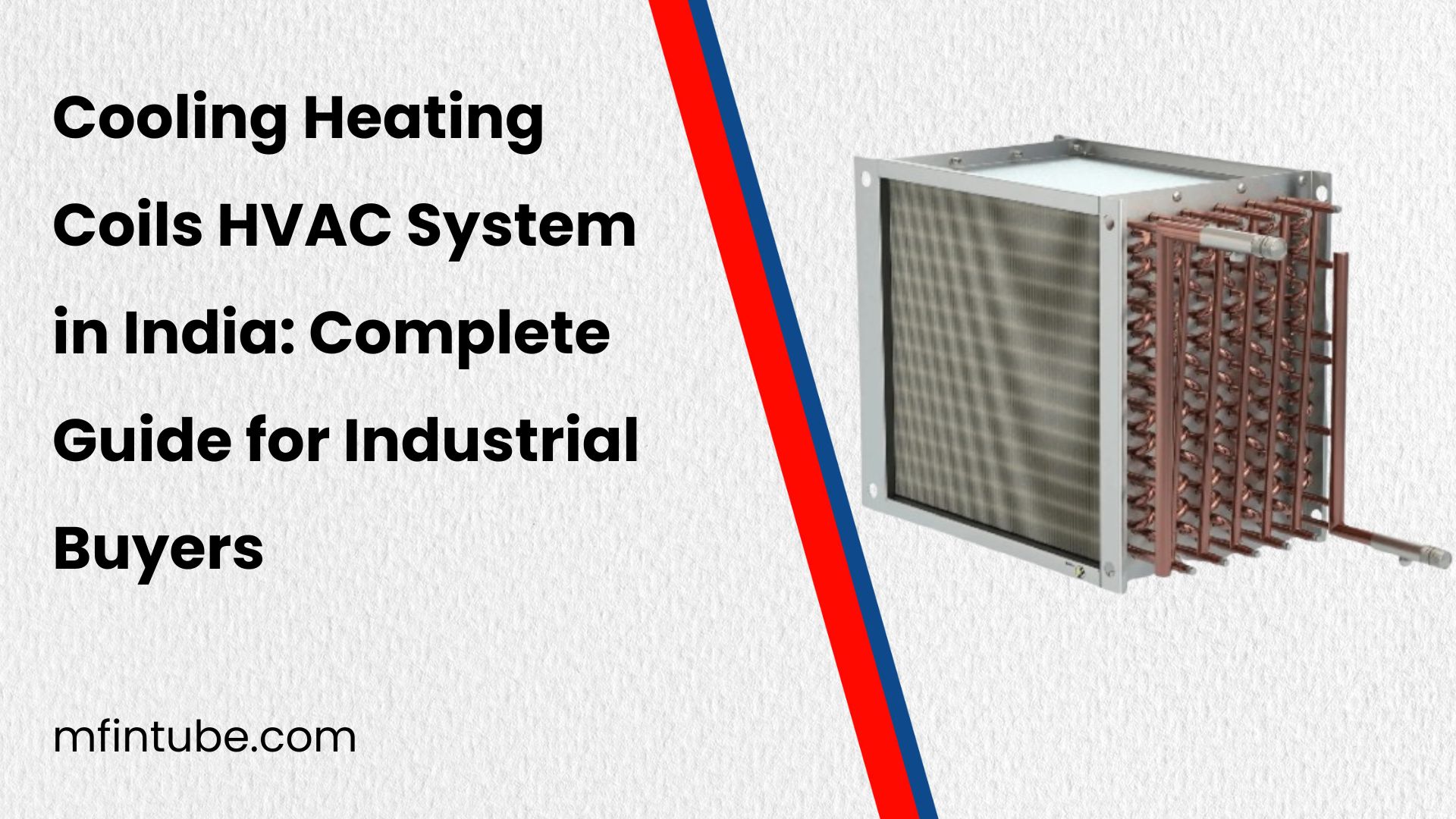
A cooling heating coils HVAC system in India uses heat-transfer coils to remove heat from or add heat to an air stream. Cooling coils commonly use chilled water, refrigerant, or other suitable cooling media, while heating coils may use hot water, steam, thermal fluids, or electric heating depending on the application.
The basic principle is heat exchange. Air passes across the coil surface while the heating or cooling medium flows through the tubes. Heat moves between the air and the medium, allowing the HVAC system to achieve the required supply-air temperature.
Coils are commonly manufactured using tube-and-fin construction. Tube material, fin material, tube diameter, fin spacing, circuit arrangement, and coil dimensions are selected according to thermal performance, airflow, pressure drop, operating conditions, and environmental requirements.
Key Features to Consider
Heat Transfer Performance
Heat-transfer capacity is one of the most important characteristics of a cooling heating coils HVAC system in India. Buyers should evaluate the required air temperature, entering and leaving fluid temperatures, airflow, and required capacity. Correct thermal design helps the coil achieve the desired output without unnecessary energy consumption.
Material Selection
Copper tubes and aluminium fins are commonly used because of their heat-transfer properties. Other material combinations may be selected where corrosion resistance, hygiene, operating pressure, or environmental conditions require a different design.
A knowledgeable heating and cooling coils supplier in India can help evaluate the suitability of materials for coastal environments, chemical exposure, high humidity, or demanding industrial conditions.
Coil Configuration
Coil rows, fin spacing, tube circuits, and face area affect thermal performance and airside pressure drop. More rows may increase heat-transfer capacity, but the design must also consider fan energy and maintenance access.
Pressure and Temperature Capability
The selected coil should be suitable for the operating pressure and temperature of the heating or cooling medium. This is particularly important for steam heating coils and applications involving high-pressure hot water or specialized process fluids.
Benefits for Industrial and Commercial Facilities
A well-designed cooling heating coils HVAC system in India can provide several operational benefits.
First, it supports accurate temperature control. Stable supply-air conditions can improve workplace comfort and protect temperature-sensitive processes or equipment.
Second, efficient heat transfer can support lower HVAC energy consumption when the coil is correctly matched with the chiller, boiler, heat pump, fan, and control system.
Third, appropriate coil selection can improve equipment reliability. Correct material selection and drainage design can reduce the risk of premature corrosion, condensate problems, or performance deterioration.
Finally, a properly designed system can support easier maintenance. Adequate fin spacing, accessible coil placement, and suitable filtration can make cleaning and inspection more practical.
Applications and Industries Served
The cooling heating coils HVAC system in India is used across multiple sectors. In manufacturing facilities, coils help control indoor conditions and process-air temperatures. Pharmaceutical facilities may require closely controlled HVAC conditions to support manufacturing and storage environments.
Food and beverage operations use HVAC and process cooling systems to manage production areas, storage spaces, and temperature-sensitive operations. Data centres use cooling coils as part of precision cooling systems, while commercial buildings use coils in air handling units and fan coil units.
Other applications include hospitals, hotels, laboratories, textile facilities, chemical plants, electronics manufacturing, cleanrooms, warehouses, and institutional buildings.
A reliable heating and cooling coils supplier in India should understand that coil requirements vary considerably between these applications. A standard comfort-cooling coil may not be suitable for corrosive environments, high-moisture conditions, hygienic facilities, or process applications.
Why Cooling and Heating Coils Are Important
HVAC coils directly influence the ability of a system to transfer heat. If a coil is undersized, the HVAC unit may struggle to achieve the required air temperature. If the coil design creates excessive air resistance, fan energy consumption may increase.
Cooling coil design also affects dehumidification. When warm, humid air passes over a cooling surface below its dew point, moisture can condense. Proper condensate management is therefore essential to prevent water carryover and maintain hygienic operation.
In heating applications, the coil must provide sufficient capacity while operating safely with the selected medium. This makes correct design of a cooling heating coils HVAC system in India important for both system performance and lifecycle cost.
Factors to Consider Before Choosing
Define the Required Capacity
Start with the actual heating or cooling load. Consider airflow, entering and leaving air temperatures, humidity requirements, fluid temperatures, operating hours, and peak conditions. Load calculations should account for the specific facility rather than relying only on general assumptions.
Evaluate Airside Pressure Drop
Coils should deliver the required heat-transfer performance without creating unnecessarily high resistance to airflow. Excessive pressure drop can increase fan power and operating costs.
Consider Fluid Type and Quality
Chilled water, hot water, steam, refrigerant, and thermal fluids have different operating characteristics. Fluid pressure, temperature, water quality, and corrosion potential should be considered when specifying the coil.
Assess Installation Conditions
Space limitations, coil orientation, maintenance access, ambient conditions, and drainage arrangements can affect the final design. Facilities in coastal or corrosive environments may require additional protection.
Choose the Right Supplier
When comparing a heating and cooling coils supplier in India, buyers should assess engineering capability, customization options, material quality, testing procedures, technical documentation, delivery reliability, and support for application-specific requirements.
Latest Industry Trends
HVAC systems in India are increasingly focused on energy efficiency, automation, indoor air quality, and application-specific design. Variable-speed fans and pumps allow airflow and fluid flow to adjust according to demand, while modern control systems use sensors and building-management platforms to improve operational visibility.
Another major trend is better coil design for reduced energy use. Manufacturers are working to balance high heat-transfer performance with acceptable pressure drops. Enhanced coil geometries and optimized fin designs can support this objective.
Indoor air quality is also receiving greater attention. Proper filtration, coil maintenance, humidity control, and cleanable equipment design are becoming more important for commercial and industrial facilities.
Digital monitoring is another development affecting the cooling heating coils HVAC system in India. Temperature, pressure, airflow, and energy data can help facility teams identify performance changes and plan maintenance before problems affect operations.
For industrial applications, customized solutions are gaining importance. Buyers increasingly require coils designed around actual fluid conditions, space constraints, corrosion exposure, and process requirements instead of selecting only standard catalogue sizes.
Why Choose Mfintube?
Mfintube can be considered by businesses looking for a dependable cooling heating coils HVAC system in India with attention to application requirements and heat-transfer performance. The company focuses on understanding factors such as capacity, airflow, operating temperatures, fluid conditions, materials, and installation needs. This application-focused approach can help industrial buyers evaluate suitable coil configurations for HVAC and process requirements.
For procurement teams and engineers, working with a supplier that understands coil customization and technical requirements can make it easier to align equipment specifications with actual operating conditions. Mfintube's approach to cooling heating coils HVAC system in India supports informed selection for projects where performance, reliability, and compatibility are important.
Conclusion
Choosing a cooling heating coils HVAC system in India requires a detailed review of thermal capacity, airflow, pressure drop, fluid characteristics, material selection, installation conditions, and maintenance needs. The right coil can contribute to temperature control, energy efficiency, equipment reliability, and better overall HVAC performance.
Industrial buyers should avoid selecting coils solely on initial cost or physical dimensions. Comparing technical capability, material suitability, customization, and lifecycle requirements is equally important. Working with an experienced heating and cooling coils supplier in India can help businesses make more informed decisions for commercial, industrial, and specialized HVAC applications.
Frequently Asked Questions
1. What is a cooling and heating coil in an HVAC system?
A cooling or heating coil is a heat exchanger that transfers heat between air and a cooling or heating medium. It is commonly used in air handling units, fan coil units, ventilation systems, and industrial HVAC equipment.
2. Which fluids are used in HVAC heating and cooling coils?
Depending on the application, coils may use chilled water, hot water, steam, refrigerant, glycol-based solutions, or other suitable thermal fluids.
3. How do I select the right cooling/heating coils HVAC system in India?
Evaluate required capacity, airflow, entering and leaving temperatures, humidity requirements, fluid type, operating pressure, pressure drop, material requirements, and installation conditions.
4. Why is airside pressure drop important?
High airside pressure drop can increase fan energy consumption and affect airflow. Coil design should balance heat-transfer performance with acceptable resistance to airflow.
5. What should I check when choosing a heating and cooling coils supplier in India?
Consider engineering expertise, customization capability, materials, manufacturing quality, testing, technical documentation, application knowledge, delivery capability, and after-sales support.
Call to Action
Looking for a suitable cooling heating coils HVAC system in India for your industrial, commercial, or process application? Connect with Mfintube to discuss your capacity requirements, airflow, operating temperatures, fluid conditions, material preferences, and project specifications. A technically appropriate cooling heating coils HVAC system in India can help you select a solution aligned with your HVAC performance and operational requirements.
Read More: Cooling Heating Coils HVAC System in India: Complete Guide for Industrial Buyers